
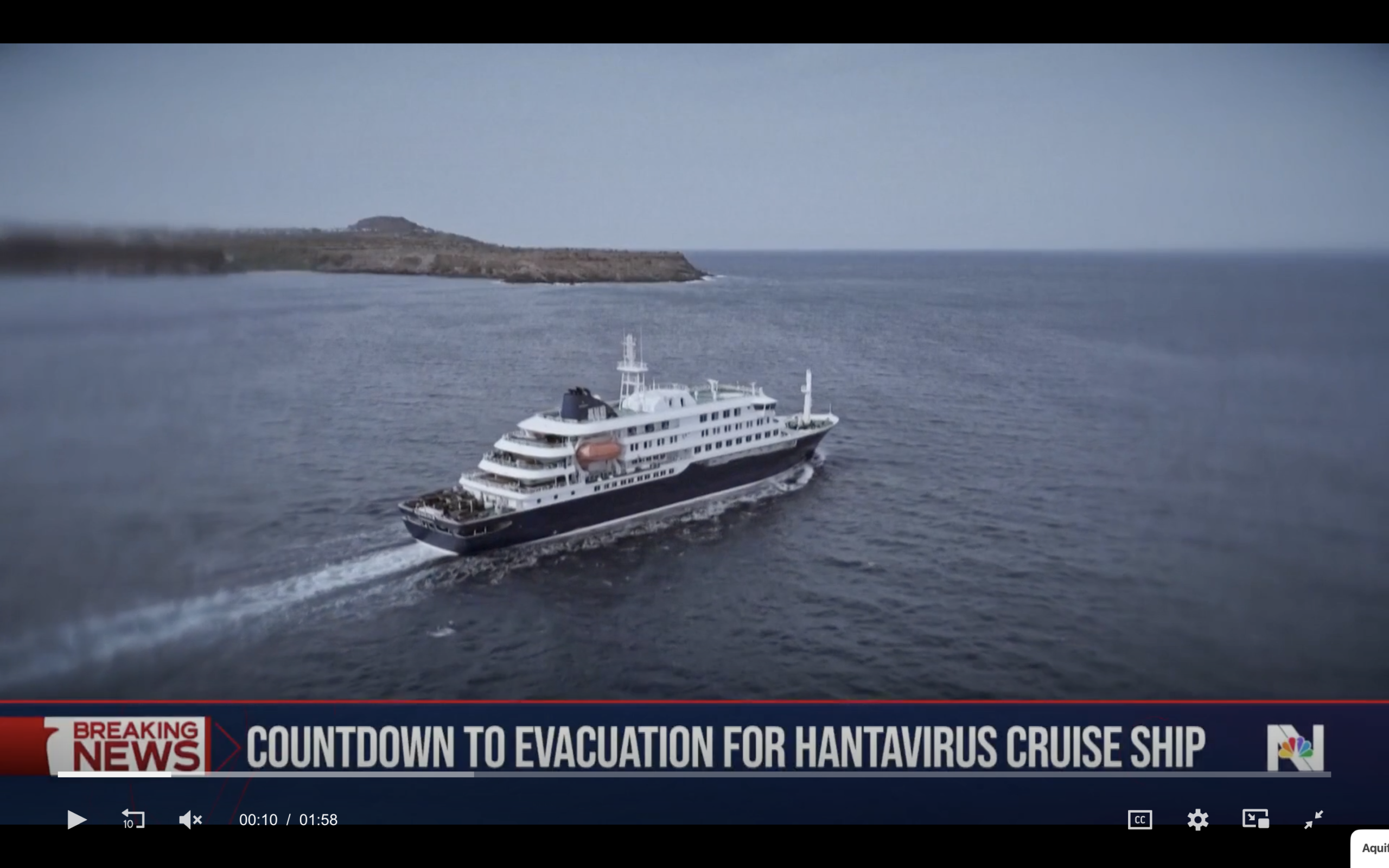
A hantavirus outbreak on board the cruise ship MV Hondius has claimed three lives and left nearly 150 passengers from 23 countries stranded at sea for weeks, sparking an international emergency response. The ship is now heading toward the Spanish island of Tenerife, where authorities have put together a detailed plan to safely bring passengers ashore and return them to their home countries.
WHO Chief Appeals for Calm
The Director-General of the World Health Organization, Dr. Tedros Adhanom Ghebreyesus, made a direct and personal appeal to the people of Tenerife on Saturday, urging them to remain calm. He acknowledged that residents are understandably worried, particularly given the painful memories of the COVID-19 pandemic, but was clear in his message — this situation is not comparable to COVID.
Dr. Tedros confirmed that the current public health risk from hantavirus for people living in Tenerife is low. He stated that no passengers on board are currently showing active symptoms, a WHO expert has been placed on the ship, and all necessary medical supplies are in place.
In an unusual move, Dr. Tedros also announced that he will personally travel to Tenerife to observe the operation firsthand and to stand alongside the health workers and officials managing the response.
What Is Hantavirus?
The virus aboard the MV Hondius is the Andes strain of hantavirus. Unlike COVID-19, hantavirus does not spread easily from person to person. It is primarily transmitted through contact with infected rodents or their droppings. The Andes strain is one of the few exceptions that may allow limited person-to-person transmission, which is why health authorities are treating the situation seriously despite the overall low public risk.
Evacuation Plan for Tenerife
Spanish authorities have put together a carefully managed step-by-step plan to handle the arrival. Passengers will be transported to the industrial port of Granadilla — located far from residential areas — in sealed and guarded vehicles, through a fully secured and cordoned-off corridor. From there, they will be repatriated directly to their home countries without coming into contact with local residents at any point.
American passengers are among those on board and are also expected to be evacuated back to the United States as part of the repatriation process.
Spain’s Role and International Obligation
Dr. Tedros personally thanked Spanish Prime Minister Pedro Sanchez for agreeing to receive the ship, calling it an act of solidarity and a fulfilment of moral and international duty. Under the International Health Regulations — the legally binding global framework for managing public health emergencies — the nearest port with adequate medical capacity must be identified to ensure the safety of those on board. Tenerife met that standard, and Spain honoured its obligation.
Dr. Tedros also praised the ship’s captain, Jan Dobrogowski, the crew, and the operating company for their cooperation throughout this difficult situation.
The Human Side
Nearly 150 passengers from 23 different countries have been at sea for weeks — some of them grieving the loss of fellow travellers, all of them frightened and longing to return home. Dr. Tedros closed his appeal to Tenerife’s residents with a reminder that has defined global health responses for decades: viruses do not care about politics, and they do not respect borders. The best protection any community has is solidarity — and Tenerife, he said, is demonstrating exactly that.