
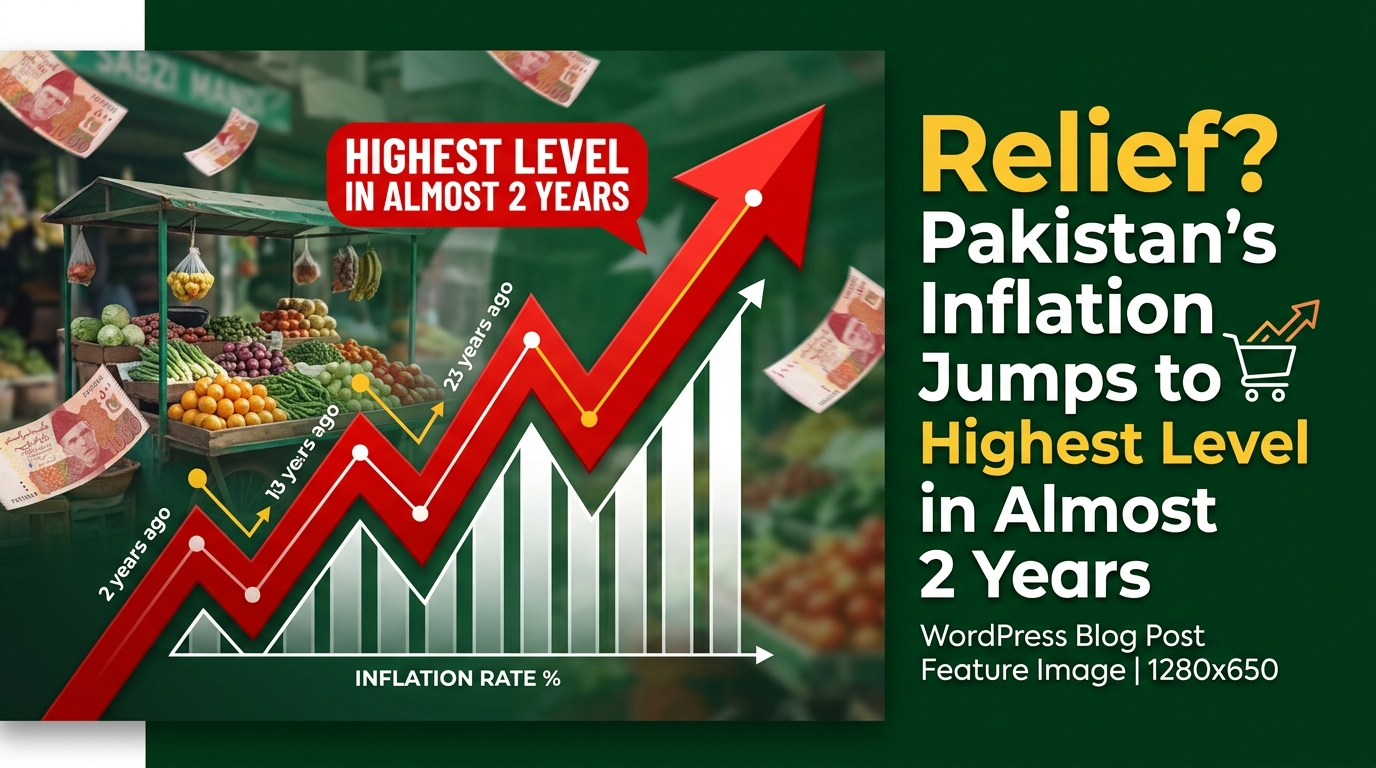
Pakistan’s inflation rate has climbed to 10.9% in April 2026, marking the steepest rise recorded in close to two years. The latest figures indicate that prices across goods and services have accelerated sharply, both on a month-on-month and year-on-year basis, squeezing household budgets nationwide.
Urban areas are bearing a slightly heavier burden, with city inflation clocking in at 11.1%, while rural regions are not far behind at 10.6%. The widespread nature of this price surge suggests that neither urban nor rural communities are finding any shelter from the economic pressure. Everyday essentials from groceries to basic food items are becoming increasingly difficult for ordinary families to afford.
The pressure is not confined to supermarket shelves alone. Wholesale prices, which determine how much goods cost before they even reach consumers, have also trended upward — a sign that relief at the retail level remains distant.
Perhaps more concerning is the rise in core inflation, which strips out volatile items to measure underlying, long-term price trends. Its upward movement signals that inflation is not a temporary spike limited to one sector it is embedding itself across the broader economy.
For millions of Pakistani households, the numbers translate into a daily struggle. Monthly budgets are under severe strain as wages and incomes fail to keep pace with the relentless rise in expenses. Many families are already cutting back on non-essential spending and rethinking how they manage their finances.
With inflation now at its highest point in nearly two years, the question on everyone’s mind remains the same — when does the relief actually arrive?