
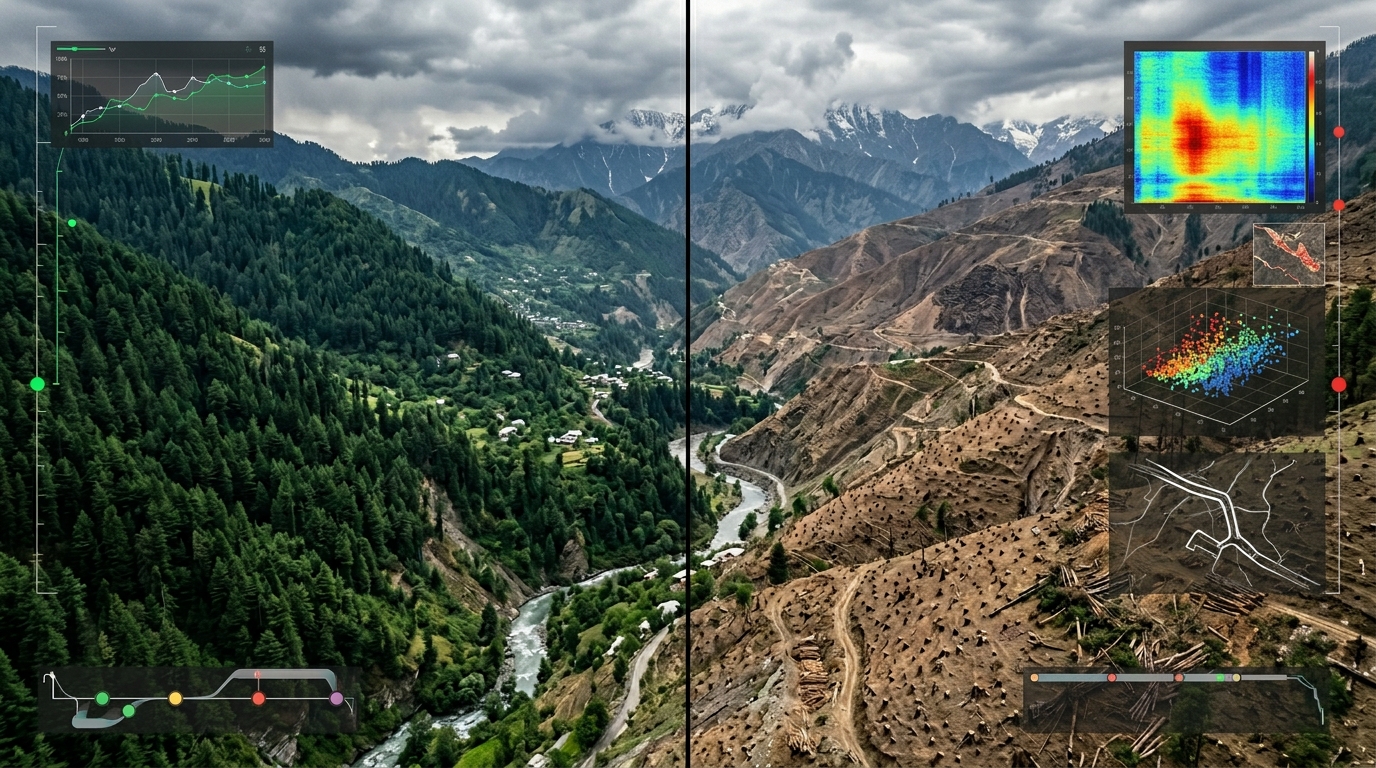
New satellite imagery comparing forest conditions between 2019 and 2026 has revealed significant deforestation in parts of Upper Dir district in Khyber Pakhtunkhwa, raising fresh environmental concerns over illegal logging and forest degradation in the region.
The satellite analysis focused on the Jatkool village area of Sheringal, where large sections of previously dense forest land now appear barren and exposed after years of tree loss.
Over 66 Hectares of Forest Land Cleared
According to reports, approximately 66.58 hectares of forest cover have been cleared over the past seven years in the affected area.
Environmental experts say the visible decline in tree cover highlights growing concerns regarding illegal timber activities, weak forest monitoring systems, and the lack of sustainable forest management in mountainous regions of Pakistan.
The issue has renewed calls for stronger environmental protection policies and stricter action against unauthorized deforestation.
Environmental Risks Linked to Deforestation
Specialists warn that continued deforestation in Upper Dir could create serious environmental and climate-related risks for nearby communities and ecosystems.
Forests in northern Pakistan play a critical role in:
- Preventing soil erosion
- Stabilizing mountain slopes
- Protecting biodiversity
- Regulating water systems
- Reducing the risk of floods and landslides
Experts say large-scale tree cutting can increase the chances of flash floods, landslides, habitat destruction, and ecological imbalance, especially during monsoon and heavy rainfall seasons.
Calls for Forest Conservation and Restoration
Environmental advocates are urging authorities to strengthen conservation efforts, improve satellite-based forest monitoring, and launch restoration projects to protect the remaining forest cover in Upper Dir and other vulnerable regions.
Conservation experts also emphasize the need for sustainable forestry policies, reforestation initiatives, and stricter enforcement against illegal logging networks operating in remote mountainous areas.
The latest satellite findings have once again highlighted the importance of environmental protection, climate resilience, and long-term forest conservation in Pakistan.