

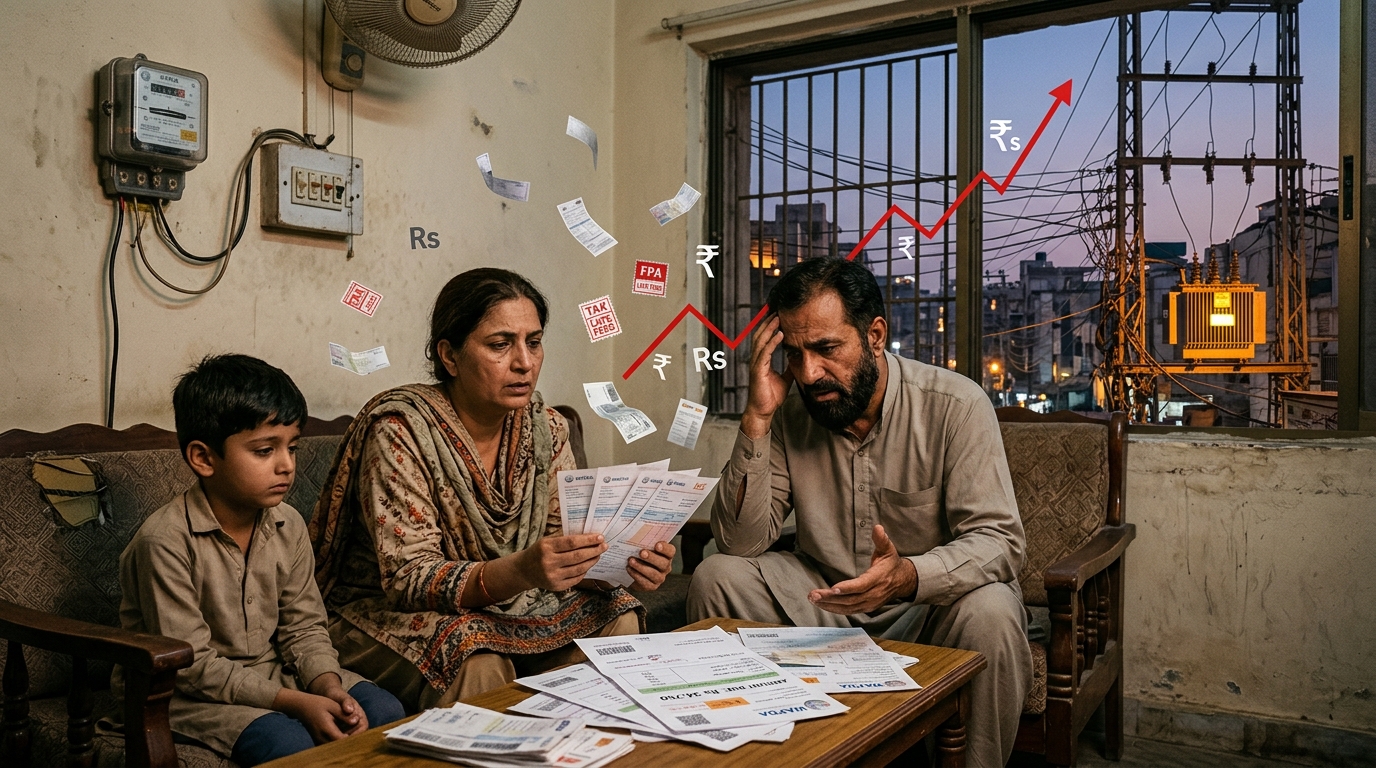
Pakistan’s electricity distribution companies collected more than Rs. 700 billion in taxes through electricity bills during the fiscal year 2024–25, highlighting the government’s growing dependence on utility-based tax collection to increase national revenue.
The latest figures show that taxes charged on electricity bills have become a major source of government income, placing additional financial pressure on consumers already struggling with high inflation, rising power tariffs, and increasing living costs.
Electricity Bills Become Major Source of Tax Revenue
According to the report, electricity consumers across Pakistan paid billions of rupees in various taxes, surcharges, and duties included in monthly utility bills. These collections are transferred to the government through power distribution companies, making electricity bills an important channel for tax recovery.
Economic experts say the system allows authorities to improve tax collection efficiency by using utility payments as a direct revenue mechanism.
LESCO Recorded Highest Tax Collection
Among all power distribution companies, the Lahore Electric Supply Company collected the highest amount, generating more than Rs. 198 billion in taxes during FY 2024–25.
The Multan Electric Power Company followed with nearly Rs. 118 billion in tax collections, while the Faisalabad Electric Supply Company collected around Rs. 112 billion from electricity consumers.
Meanwhile, the Islamabad Electric Supply Company recorded approximately Rs. 87.63 billion in tax collections during the same fiscal year.
Other Distribution Companies Also Contributed
Additional power distribution companies also played a significant role in overall tax recovery. The Peshawar Electric Supply Company collected nearly Rs. 50 billion, while the Hyderabad Electric Supply Company generated close to Rs. 20 billion through electricity bill taxes.
In comparison, the Tribal Electric Supply Company reported much lower collections, with around Rs. 190 million in taxes during the fiscal year.
Rising Electricity Costs Continue to Concern Consumers
Consumers across Pakistan continue to express concern over increasing electricity bills, which now include multiple taxes, fuel adjustments, surcharges, and additional charges beyond the actual electricity consumption cost.
Higher electricity expenses are affecting household budgets, especially for middle- and lower-income families already dealing with inflation and economic uncertainty.
Economists Warn of Growing Financial Pressure
Economists believe that while electricity-based tax collection helps improve government revenue and tax recovery, it also increases the financial burden on ordinary citizens and businesses.
Experts suggest that long-term economic stability will require broader tax reforms and alternative revenue strategies to reduce dependence on utility bills and provide relief to consumers facing rising energy costs.
The report reflects the expanding role of electricity taxation in Pakistan’s fiscal system and its growing impact on affordability, inflation, and everyday living expenses.