
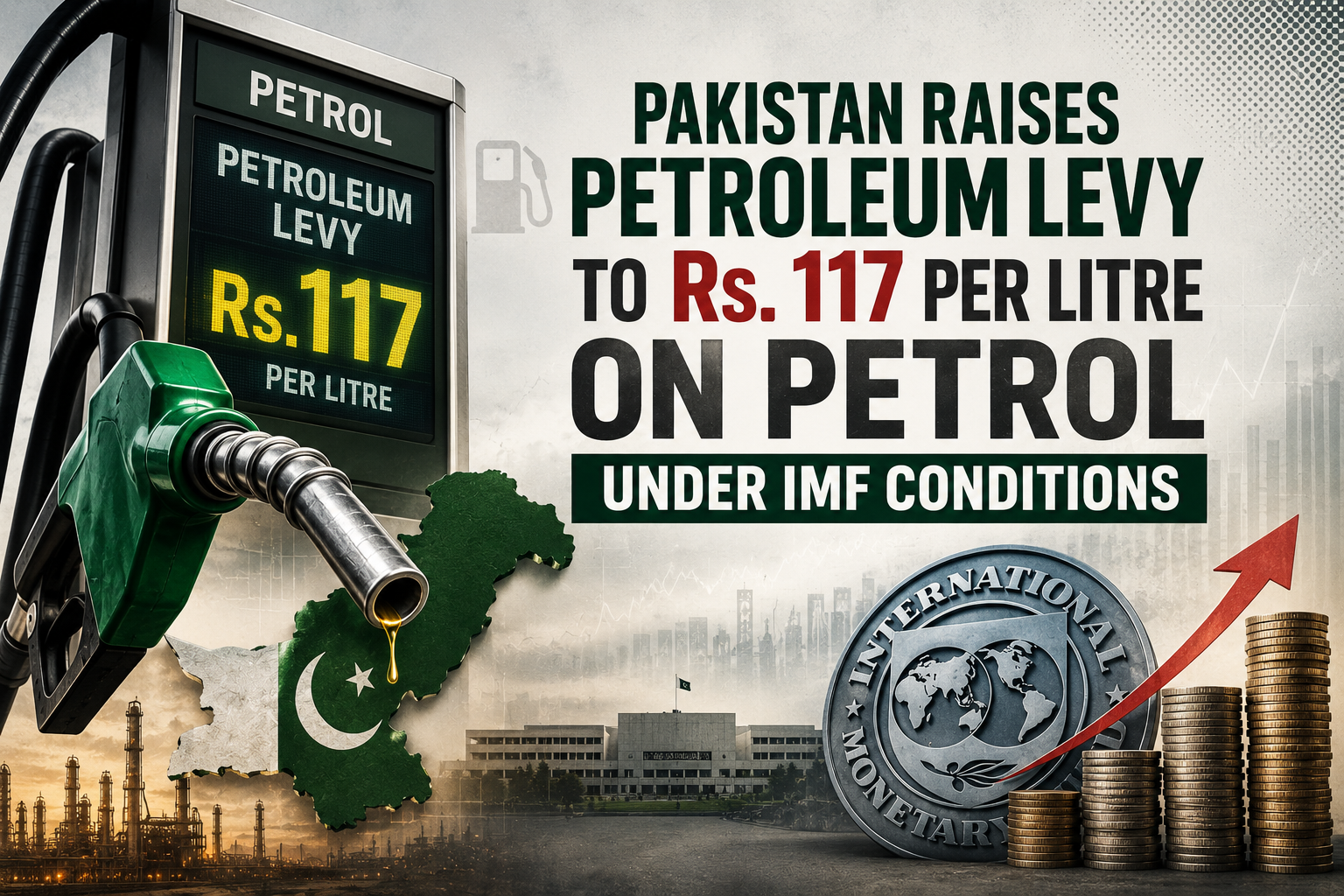
The government has raised the petroleum levy on fuel products as part of its commitments under the International Monetary Fund programme, adding more financial pressure on citizens who are already struggling with the rising cost of living.
According to reports, the petroleum levy on petrol has now gone up to Rs. 117.41 per litre, while the levy on high-speed diesel has risen to Rs. 42.60 per litre. The latest increase came after an additional charge of Rs. 13.91 per litre was added to both petrol and diesel.
Government officials confirmed that this increase was made to meet the conditions set by the IMF. With this latest revision, Pakistan has now fulfilled the IMF requirement of reaching a combined petroleum levy target of Rs. 160 per litre on fuel products.
The rise in fuel taxes is expected to directly impact transport costs, food prices, and everyday household expenses across the country. Economists warn that higher fuel charges tend to push up prices in almost every sector of the economy — from food delivery and public transport to industrial production — because fuel is connected to nearly everything.
Many ordinary citizens and business owners have voiced their concerns over the growing financial burden caused by repeated fuel price increases and higher taxes. Transporters and industrial sectors are particularly worried, as higher fuel costs are likely to increase their operational expenses and reduce the overall purchasing power of consumers in the market.
Economic experts say the government is working to improve revenue collection and meet its international financial commitments while dealing with serious fiscal challenges. However, they also caution that repeated increases in petroleum-related charges could add further inflationary pressure on consumers who are already finding it difficult to manage their monthly budgets.
This latest development comes at a difficult time for Pakistan, which is already facing rising inflation and higher import costs driven by global oil market uncertainty and ongoing regional tensions in the Middle East.